

Discover how to start and operate a profitable Airbnb in Bali as a foreign investor. Learn about market performance, ROI potential, legal permits, and PT PMA setup for short-term rental businesses.
Bali’s Tourism Revival: A Window of Opportunity
Bali remains a global tourism powerhouse, ranking among TripAdvisor’s Top 5 Most Popular Destinations for 2025. As international travel resumes and quarantine-free entry expands, visitor numbers are climbing once again. For investors, this rebound signals renewed potential in the short-term rental market, especially for villa owners and Airbnb hosts.
The State of Bali’s Short-Term Rental Market
Before the pandemic, Bali hosted over 6 million international visitors annually, fueling consistent growth in vacation rentals. Even during 2020’s global slowdown, the island attracted around one million long-stay guests—mainly digital nomads and remote workers—helping sustain rental demand in hubs like Canggu, Seminyak, and Ubud.
Since borders reopened, tourism indicators have improved steadily. The first quarter of 2022 recorded a 13.6 percent rise in international arrivals, supported by government efforts to simplify travel. This upward trend continues through 2024–2025, pointing toward a sustained market recovery.
Profitability Outlook: Airbnb Yields in Bali
Operating an Airbnb in Bali remains one of Asia’s most profitable property ventures. The Telegraph previously reported that average annual Airbnb earnings in Bali exceeded USD 40,000, surpassing major cities such as London, Tokyo, and Barcelona.
From 2017 to 2019, average monthly revenue for villa rentals grew by about 20 percent annually, led by strong demand in Canggu and Seminyak. Current forecasts suggest that with global tourism normalizing, returns could match or exceed pre-pandemic performance.
Typical ROI ranges between 8 and 12 percent, depending on location and villa quality. Property values have also proven resilient, as most owners chose to rent rather than sell during downturns, maintaining price stability across prime areas.
Legal Requirements: How Foreigners Can Operate Airbnb Rentals
Running a short-term rental in Bali requires compliance with local regulations and zoning laws.
- Building Permit (IMB or PBG) – Confirms that the property meets construction standards.
- Pondok Wisata License – Authorizes daily or short-term rentals; this permit can only be registered under an Indonesian citizen’s name and applies to properties within designated tourism zones.
Foreign investors have two compliant options:
- Purchase a villa with an existing Pondok Wisata license, enabling immediate Airbnb operation.
- Establish a foreign-owned company (PT PMA) under the Hospitality Management Consulting category.
A PT PMA allows foreigners to legally operate rental businesses, manage multiple properties, and—under certain conditions—acquire freehold property through the company.
Proper licensing and structure are essential to avoid fines, suspension, or legal complications.
Strategic Investment Insights
When selecting a villa for Airbnb, investors should focus on high-yield zones such as Seminyak, Canggu, Berawa, Bingin, Uluwatu, Pandawa and Pererenan, where occupancy rates and nightly prices remain strongest. Key factors influencing profitability include:
- Professional property management and digital marketing strategies
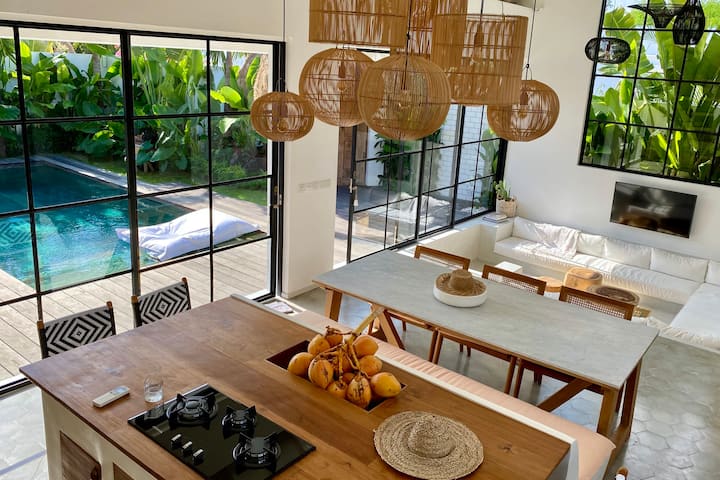
- Premium design, furnishings, and guest amenities
- Compliance with taxation and business regulations under a PT PMA structure
Market analysts expect the short-term rental segment to remain one of Bali’s top investment classes as tourism and infrastructure projects continue to expand.
Bali offers a compelling combination of strong rental yields, resilient property values, and long-term tourism growth. For foreign investors, establishing a compliant structure—either through a licensed Pondok Wisata property or a PT PMA company—is the foundation for success in the Airbnb market.
Investors ready to enter the sector should consult with local legal and property experts to identify suitable villas, verify licensing, and structure their operations for optimal return.









 bali-interior.com